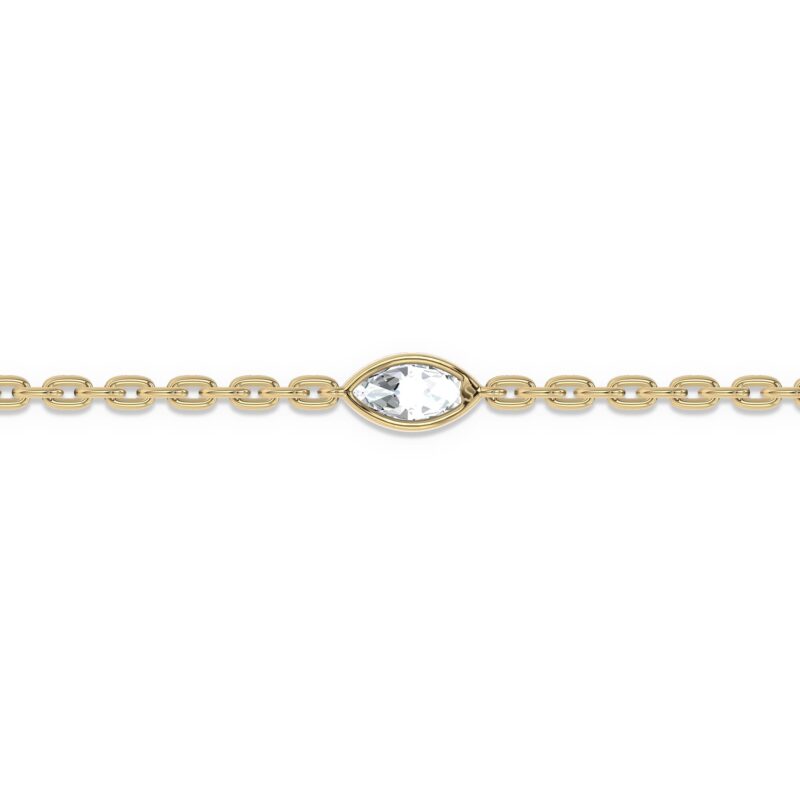
Lab-Grown Diamond Necklace Care is one of those subjects that can either make a lab-grown diamond purchase feel clearer or more confusing, depending on how it is explained. For owners whose necklaces collect lotion, perfume, sunscreen, and hair products, the answer should be practical, specific, and connected to the final piece of jewellery rather than treated as an isolated technical term.
Tailor Diamonds approaches lab-grown diamond education from a working jewellery perspective. The brand combines more than 30 years of diamond industry experience with daily involvement in custom lab-grown diamond rings, earrings, necklaces, bracelets, and wedding jewellery. That experience matters because buyers do not wear a report; they wear a finished piece that must look beautiful, feel secure, and remain understandable long after the purchase.
What Lab-Grown Diamond Necklace Care Means in Real Life
Lab-Grown Diamond Necklace Care is not just a phrase to place in a product filter. In real buying conversations, it affects wearing order, cleaning frequency, chain checks, and storage habits. That is why the topic deserves a practical explanation rather than a quick rule.
Many clients arrive with a narrow concern: owners whose necklaces collect lotion, perfume, sunscreen, and hair products. The concern is understandable, but the best answer usually comes from connecting gemological facts with the way the finished piece will be worn.
At Tailor Diamonds, this is where more than 30 years of diamond industry experience becomes useful. We work with lab-grown diamond jewellery as a complete object: the stone, the setting, the metal, the certificate, the service record, and the person who will wear it.
Why This Matters for Lab-Grown Diamond Buyers
Lab-grown diamonds give buyers more design flexibility, but flexibility also creates more decisions. The right question is not simply whether a specification sounds impressive. The right question is whether it supports the finished jewellery.
When evaluating lab-grown diamond necklace care, the buyer should look for a clear relationship between the report, the visual appearance, and the intended design. A detail that matters in one ring may be less important in earrings, a pendant, or a bracelet.
This is especially important for custom jewellery. A piece that will be worn every day needs more than an attractive center stone. It needs proportion, security, comfort, and documentation that all make sense together.
The Practical Details to Check
Start with the evidence. For this topic, the key details include necklace care, perfume, sunscreen, chain, pendant cleaning. These details should be visible in the product description, explained by the consultant, or supported by the grading report when a report is relevant.
Next, look at scale. A diamond that performs beautifully in close-up photography may feel different once it is placed on a hand, ear, neck, or wrist. Measurements, setting height, and metal width change the result.
Finally, consider how the piece will be used. Daily jewellery needs a different standard of comfort and maintenance than a special-occasion piece. A good recommendation should acknowledge that difference instead of treating every buyer the same.
How Tailor Diamonds Reviews the Decision
Our internal approach is to connect lab-grown diamond necklace care with the customer's real goal. If the goal is an engagement ring, we review the stone with the setting, finger coverage, production timeline, and long-term servicing in mind.
If the goal is a necklace, bracelet, or earrings, we look more closely at weight, movement, clasp or backing security, and how the piece will sit during regular wear. The same diamond language does not always translate the same way across categories.
This is also where transparency matters. A confident recommendation should be easy to explain. If a buyer cannot understand why a stone or design has been suggested, the process has not done enough work.
Common Mistakes to Avoid
The first mistake is relying on one number. Carat weight, color grade, clarity grade, or price can each be useful, but none of them alone proves that a piece will feel right.
The second mistake is ignoring context. Lab-Grown Diamond Necklaces and Skin Care: What to Avoid should be assessed with the actual jewellery design in mind. A decision that is sensible for a solitaire ring may not be ideal for a pave band or a drop earring.
The third mistake is forgetting service. Fine jewellery should be checked, cleaned, and maintained. A beautiful piece becomes a better long-term purchase when the brand can support it after delivery.
Lab-Grown Diamond Necklace Care Checklist
Confirm that the seller can explain lab-grown diamond necklace care in plain language, not only in sales terms.
Ask whether the diamond report, design drawing, or product specification supports the recommendation.
Check that the image or video shows the real design clearly enough to evaluate shape, scale, and finish.
Make sure the setting, clasp, backing, or chain detail matches how often the piece will be worn.
Keep the report, receipt, service notes, and any design confirmation together for future care or insurance.
Final Guidance on Lab-Grown Diamond Necklace Care
The strongest choice is rarely the one that sounds most dramatic in isolation. The strongest choice is the one that makes the whole piece more coherent: the diamond, the setting, the metal, the documentation, and the way the jewellery will live with its owner. That is the standard Tailor Diamonds uses when guiding clients through lab-grown diamond necklace care.
For buyers, the practical path is simple: ask clear questions, compare evidence, review the design context, and choose the option that remains convincing after the excitement of the first image has passed. That is how a lab-grown diamond purchase becomes not only beautiful, but dependable.
Real Client Scenario
A common Tailor Diamonds consultation starts like this: an owner wants to keep a meaningful piece beautiful without treating it as too fragile to enjoy. That is where lab-grown diamond necklace care becomes more than an abstract topic. It becomes part of a practical decision that affects confidence, comfort, and long-term satisfaction.
In those conversations, we usually slow the process down. We compare what the buyer can see, what the documentation proves, and what the finished piece needs to do in daily life. That method is less dramatic than a simple sales answer, but it is more reliable. It also helps buyers avoid paying for details that do not improve the final result.
The strongest recommendations are the ones that can be explained clearly after the purchase. A customer should be able to remember why a diamond, metal, setting, or care plan was chosen. If the reasoning disappears once the sales conversation ends, the guidance was not strong enough.
Quick Buyer Summary
Main topic: lab-grown diamond necklace care in lab-grown diamond jewellery.
Best first check: wearing order, cleaning frequency, chain checks, and storage habits.
Best evidence: a clear product specification, grading report when relevant, real imagery, and a brand that can explain the recommendation.
Best long-term habit: keep documentation, clean gently, and schedule professional checks when stones, clasps, chains, or prongs show wear.
Frequently Asked Questions
Is lab-grown diamond necklace care the most important factor?
It is important, but it should not be isolated from wearing order, cleaning frequency, chain checks, and storage habits. Lab-grown diamond buying works best when the technical details and the final jewellery design are reviewed together.
Should I ask for documentation?
Yes. For significant lab-grown diamond purchases, a grading report, order record, or design confirmation helps protect clarity and trust. Documentation is also useful for insurance, repair, and future servicing.
Can Tailor Diamonds help compare options?
Yes. A useful comparison should explain how lab-grown diamond necklace care affects the specific ring, necklace, bracelet, or earrings being considered, not only how it appears in a generic chart.
A practical Tailor Diamonds guide to lab-grown diamond jewellery care kit, covering lab-grown diamond evidence, buying checks, China production context, and long-term jewellery confidence.
A practical Tailor Diamonds guide to lab-grown diamond jewellery appraisal, covering lab-grown diamond evidence, buying checks, China production context, and long-term jewellery confidence.
A practical Tailor Diamonds guide to photograph lab-grown diamond jewellery, covering lab-grown diamond evidence, buying checks, China production context, and long-term jewellery confidence.
A practical Tailor Diamonds guide to lab-grown diamond jewellery care myths, covering lab-grown diamond evidence, buying checks, China production context, and long-term jewellery confidence.
A practical Tailor Diamonds guide to lab-grown diamond necklace care, covering lab-grown diamond evidence, buying checks, China production context, and long-term jewellery confidence.
A practical Tailor Diamonds guide to lab-grown diamond jewellery repair, covering lab-grown diamond evidence, buying checks, China production context, and long-term jewellery confidence.
A practical Tailor Diamonds guide to lab-grown diamond ring resizing after proposal, covering lab-grown diamond evidence, buying checks, China production context, and long-term jewellery confidence.
A practical Tailor Diamonds guide to passing down lab-grown diamond jewellery, covering lab-grown diamond evidence, buying checks, China production context, and long-term jewellery confidence.
A practical Tailor Diamonds guide to lab-grown diamond bracelet care, covering lab-grown diamond evidence, buying checks, China production context, and long-term jewellery confidence.
A practical Tailor Diamonds guide to engraving lab-grown diamond rings, covering lab-grown diamond evidence, buying checks, China production context, and long-term jewellery confidence.
A practical Tailor Diamonds guide to lab-grown diamond anniversary gift meaning, covering lab-grown diamond evidence, buying checks, China production context, and long-term jewellery confidence.
A practical Tailor Diamonds guide to travelling with lab-grown diamond jewellery, covering lab-grown diamond evidence, buying checks, China production context, and long-term jewellery confidence.
 IGI Certified.