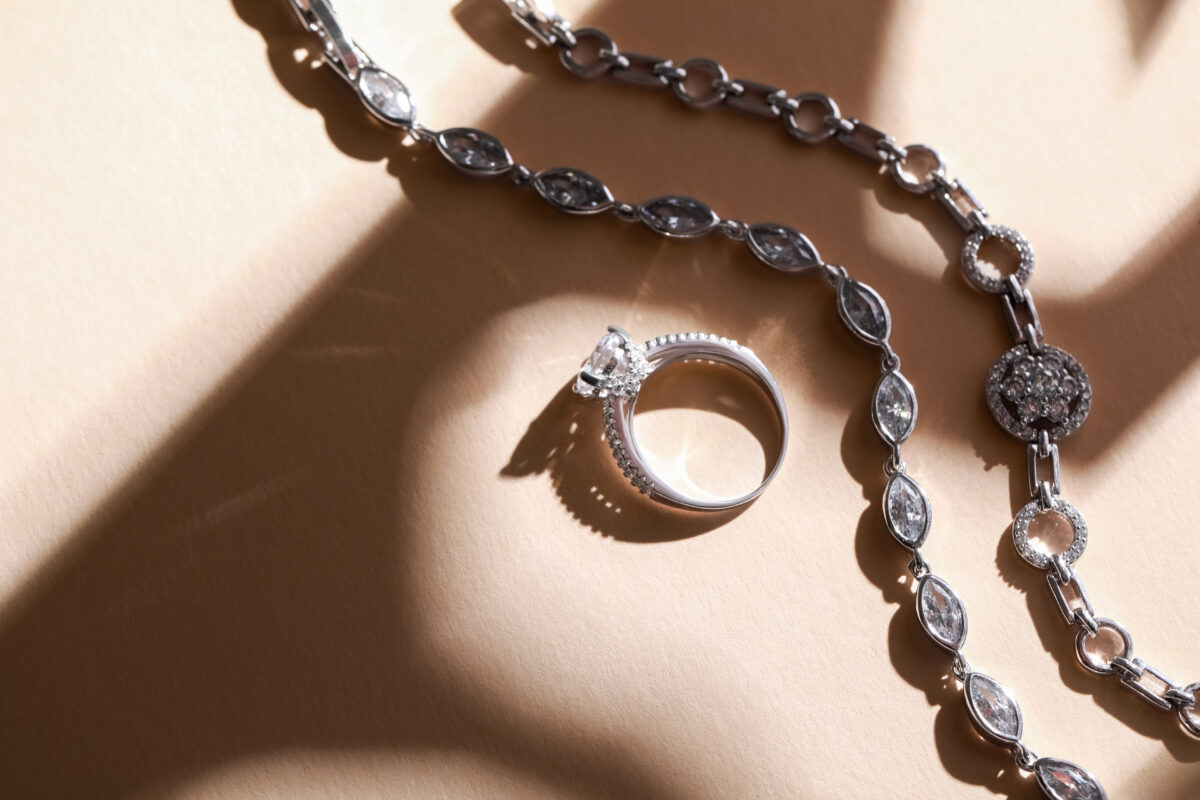
When customers begin designing a ring, they often focus first on the center stone, and understandably so. But metal choice has a powerful effect on the final personality of the piece. The same diamond can feel cooler, warmer, softer, more modern, or more classic depending on whether it is set in white gold, yellow gold, rose gold, or platinum. That is why metal selection should never be treated as a secondary technical step. It is part of the design language of the ring itself.
At Tailor Diamonds, we help clients approach metal choice with the same seriousness we bring to stone selection and setting design. With more than 30 years of diamond expertise and the experience of one of China's largest lab-grown diamond specialists, we know that subtle decisions often produce the biggest difference in how a ring feels over time.
Why Metal Choice Matters More Than Buyers Expect
The tone of the metal influences first impressions immediately. A ring in white gold or platinum often feels sleek, clean, and contemporary. A ring in yellow gold can feel richer, warmer, and more traditionally luxurious. Rose gold introduces a softer, more romantic cast that many wearers find distinctive without being loud. None of these is universally better. The question is which one supports the character of the ring and the person wearing it.
Metal choice also affects contrast. Certain diamond shapes and designs seem more dramatic when paired with cooler white tones, while others become more expressive in warmer settings. These relationships are subtle but important. A ring that feels slightly underwhelming in one metal can become perfect in another.
White Gold: Clean, Bright, and Versatile
White gold remains one of the most popular choices for engagement rings because it creates a bright, neutral frame around the diamond. It tends to support a modern, polished look and works beautifully across many shapes and setting styles. Buyers who like minimalism, sharp lines, and a cooler jewellery palette often feel comfortable with white gold.
Another advantage of white gold is its versatility. It can sit comfortably alongside many existing pieces, especially for customers who already wear white metal watches, bracelets, or earrings. When clients want the diamond to feel crisp and prominent, white gold is often a very natural starting point.
Yellow Gold: Warmth, Depth, and Timeless Presence
Yellow gold brings a different kind of strength. It carries warmth, heritage, and visual richness, often making a ring feel more classic or more intentional depending on the design. In some settings, yellow gold can create a beautiful sense of depth, especially when paired with diamonds that the wearer wants to frame in a more luxurious, golden context.
Buyers sometimes assume yellow gold is only for more traditional styles, but that is too narrow. In a modern setting, yellow gold can feel very fresh and confident. What matters is the balance between the metal tone and the geometry of the design. When done well, yellow gold has both timelessness and presence.
Rose Gold: Soft, Romantic, and Slightly Distinctive
Rose gold is often chosen by wearers who want warmth with a softer edge. It feels romantic, flattering, and subtly individual. It may not be the most traditional option, but it often becomes deeply personal because it carries a gentle character that many people feel connected to immediately.
Rose gold works especially well when the wearer already gravitates toward softer tones in fashion or jewellery. It can also add warmth to minimalist designs that might otherwise feel too cold in a white metal. In custom work, it often becomes the metal that transforms a ring from simply beautiful into unmistakably personal.
Platinum: Weight, Prestige, and Quiet Confidence
Platinum is often associated with premium weight and permanence. It offers a naturally white tone and is valued by clients who want the feel of a dense, substantial, and high-end metal. Platinum can be an excellent choice for customers who appreciate understated luxury and want a ring that feels especially serious in its construction.
It is not necessarily the right choice for everyone, just as no metal is, but it carries a particular emotional weight that some buyers value deeply. It is often chosen by people who want the ring to feel enduring in every sense, visually and materially.
How to Match Metal to Personal Style
The easiest way to narrow metal choice is to look at what the wearer already responds to naturally. Do they wear mostly white metals? Do they choose warmer tones? Do they prefer classic pieces or more expressive, softer jewellery? Their existing choices often provide the best clues. A ring that aligns with those instincts will usually feel more natural from the beginning.
Lifestyle also matters. Some customers want a ring that integrates seamlessly into an existing collection. Others want the ring to stand apart as a signature piece. The right metal can support either goal when chosen intentionally.
Design Harmony Matters More Than Rules
It is tempting to search for rigid rules about which metal works best with which diamond or which hand tone, but the truth is more nuanced. Strong jewellery design is about harmony. The diamond shape, the setting architecture, the band width, the finish, and the metal tone all need to speak the same visual language. A metal that looks attractive in theory may not be the one that produces the most satisfying final piece.
That is why trying on, comparing, or discussing the full design context is so important. The best decision emerges when the metal is considered as part of the ring, not as a separate afterthought.
Choose the Metal That Makes the Ring Feel Complete
In the end, the right metal is the one that makes the ring feel complete. It should support the diamond, flatter the wearer's style, and strengthen the emotional tone of the design. Whether that means white gold, yellow gold, rose gold, or platinum, the answer should come from the overall feeling of the piece, not from trend pressure alone.
At Tailor Diamonds, that is exactly how we help clients make the choice. We do not treat metal as a checkbox. We treat it as one of the key decisions that gives a ring its personality. And when that choice is made well, the entire ring becomes more coherent, more personal, and much more satisfying over the long term.
What White Gold Looks Like in 2026
The way informed clients approach white gold has shifted noticeably in the last few years. Information is easier to access, grading has become more standardised, and the gap between specialist jewellers and generic retailers has become more visible. At Tailor Diamonds, we see this change every week across the white gold projects we take on, and it has made the conversation with clients much more productive.
Modern buyers ask sharper questions about cut performance, proportion, and finish rather than focusing on surface metrics alone. They also want honest trade-off discussions rather than sales scripts. A perfect approach to white gold meets these expectations by pairing technical detail with clear explanation. When the reasoning behind a recommendation is made visible, decisions feel easier and results feel more personal.
Lab-grown diamond production has reshaped what is possible for white gold as well. Budget flexibility has expanded without sacrificing quality, which opens up design directions that would have required compromise five years ago. For serious buyers, the combination of better information and broader production capacity means white gold decisions in 2026 can be more ambitious and more considered at the same time.
How We Think About White Gold at Tailor Diamonds
Our perspective on white gold is grounded in three decades of diamond industry experience. That long-term context informs how we shortlist stones, how we propose settings, and how we explain trade-offs to clients. Being positioned among China’s largest lab-grown diamond specialists gives us the scale to offer consistent quality without narrowing the range of options available to each client.
Every white gold project starts with a listening phase. What does the client actually want the piece to do? How will it be worn? What emotional moment does it mark? These answers shape every later decision. Skipping this step is the most common reason for a piece that looks correct on paper but feels wrong on the finger. We consider it non-negotiable.
After the brief is clear, our workshop applies the same quality standards whether the commission is modest or ambitious. Setting precision, finish quality, stone placement, and final polish are all examined with the same discipline. That level of attention is what turns a white gold project from a decent piece into a perfect one you want to wear every day.
Common Pitfalls to Avoid with White Gold
Chasing size over cut. Larger does not mean more beautiful. A well-proportioned stone at a slightly smaller carat weight consistently outperforms a larger stone with weaker cut. This is especially true for white gold, where visual proportion is more important than raw size.
Following trends blindly. Trend-driven decisions often age poorly. A piece that felt current three years ago may feel dated today. A perfect approach to white gold prioritises design choices that look as intentional in five years as they do now.
Underestimating the setting. Stones get the attention, but settings define how a piece actually wears. Prong height, bezel profile, band proportion, and finish all change the daily experience of the ring. These choices deserve real consideration.
Treating documentation as optional. Every serious white gold purchase should come with grading reports, written specifications, and after-sales terms. Skipping documentation is the easiest way to lose clarity about what was actually delivered.
A Practical Checklist for White Gold in 2026
1. Confirm the brief before shortlisting anything
Clarity on wear context, budget range, and emotional intent should exist before any stones or settings are reviewed. This keeps the process focused and respectful of your time.
2. Prioritise cut performance
Cut grade drives visual impact more than any other factor in white gold. An excellent or ideal cut consistently beats larger but less precisely cut stones.
3. Insist on recognised grading reports
Reports from GIA or IGI are the standard. They document the 4Cs and confirm the identity of every stone in serious white gold work.
4. Test the setting in context
Look at how the setting pairs with the stone under natural light and in the metal you plan to wear every day. Photographs under perfect studio light often flatter in ways that daily wear will not.
5. Plan for the long term
Consider how you will service, resize, and care for the piece over decades. A white gold decision is not only about how the ring looks now. It is about how it lives with you.
Why Experience Still Matters for White Gold
New tools and new production methods do not replace the judgement that comes from thousands of completed projects. Experience is what lets a specialist see subtle misalignments in proportion, anticipate setting behaviour under wear, and match a diamond to a design so that both elevate each other. Thirty years of continuous diamond work has taught us that white gold outcomes are best when this experience is paired with modern technology rather than replaced by it.
That is why Tailor Diamonds combines long-term expertise with lab-grown scale. The result is a white gold practice that delivers perfect craftsmanship with modern flexibility. Clients get the discipline of an established diamond house and the creative range that only modern production makes possible.
How Lab-Grown Production Changes the White Gold Equation
Lab-grown diamond scale is not just a price-point story. It changes what is realistic for white gold across design, sizing, and quality combinations. Stones that would have been prohibitively expensive as mined options are now accessible, which means ambitious designs get a fair hearing rather than being dismissed early. For Tailor Diamonds clients working on white gold in 2026, this shift shows up in the briefs we accept: larger centre stones, richer detailing, more distinctive shapes, and more adventurous custom work than was typical only a few years ago.
Because we operate at the scale of a major lab-grown specialist, we can also guarantee consistent quality across that range. A white gold project that depends on a precise cut grade, colour grade, or clarity window is easier to execute when the underlying inventory is deep and well-curated. Clients benefit from both the breadth of options and the discipline of a team that knows how to evaluate them.
Importantly, this does not mean bigger is always the goal. For many white gold decisions, the right answer is still a perfectly proportioned, excellently cut stone at a moderate size. The point is that lab-grown scale removes the trade-off between ambition and feasibility, so the real question becomes simply: what suits the wearer, the context, and the design direction best?
What a Perfect White Gold Outcome Actually Feels Like
Clients sometimes ask how they will know if a white gold project has truly delivered. The answer is surprisingly consistent across different projects. A perfect outcome feels resolved in the hand. The piece sits comfortably, looks correct at every angle, and does not draw attention to any single detail at the expense of the whole. It reads as intentional rather than layered.
Over time, the same feeling translates into confidence. You reach for the piece often. You forget to worry about it because it behaves well. You notice it appreciatively in ordinary moments rather than only on special occasions. That durable emotional response is the real test of whether the white gold decision was well made. It is also why proportion, finish, and comfort matter as much as the specifications on a grading report.
At Tailor Diamonds, this is the outcome we work toward on every white gold commission. Three decades of experience have taught us that serious craftsmanship and honest communication are what make the difference between a ring that looks correct and a ring that feels right. We think the second is what actually matters.
Where Experience Shows in the Details
Looking at white gold more closely, the differences between a decent result and a genuinely good one live in details that are easy to overlook during the shopping process. Prong height and finish on an engagement setting. The way a bracelet closure sits at rest. The internal polish of a pavé gallery that you only notice when the piece turns in the light. These small decisions accumulate, and they are what separate ordinary work from craftsmanship worth paying for.
This kind of attention is hard to advertise and harder to fake. It shows up only when the team doing the work has genuine discipline about their standards. At Tailor Diamonds, that discipline is built into every stage of a white gold project. It is also why we feel comfortable inviting close inspection of anything we deliver. A perfect piece of jewellery should reward a second look, not discourage one.
Much of our long-term client loyalty traces back to exactly this kind of attention. When you can hand a finished ring to its wearer and watch them notice the small touches without prompting, you know the project has landed where it should. That quiet affirmation from clients is, frankly, the most honest performance review a jeweller can ask for, and it is why we refuse to compromise on the details that make a meaningful difference for white gold projects across every price bracket we handle.
Ready to Take the Next Step with Your White Gold Project?
 IGI Certified.